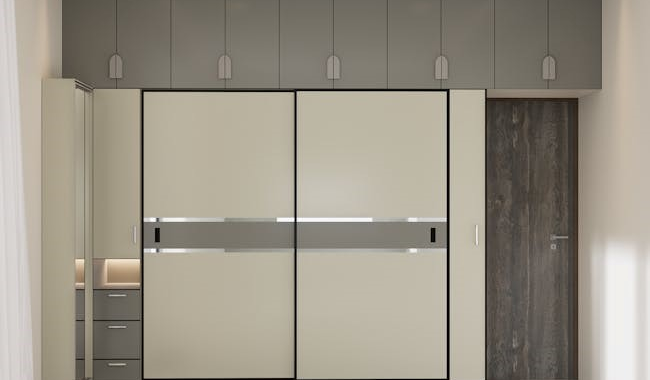
Understanding Sliding Closet Door Floor Guides
Sliding closet doors need proper floor guides, especially on carpet, to stay aligned, prevent derailment, and operate smoothly – a crucial, often missed detail.

The Importance of a Floor Guide
A floor guide is absolutely essential for the reliable function of sliding closet doors, particularly when installed over carpet. Without a secure guide, the doors can easily become misaligned, swinging outwards and potentially derailing from their track. This not only creates a safety hazard but also diminishes the space-saving benefit of sliding doors.
The guide maintains vertical stability, ensuring the doors glide smoothly and quietly along the intended path. Carpet introduces a compressible surface, making a robust floor guide even more critical. It counteracts the carpet’s give, preventing the doors from catching or binding, and preserving the overall functionality and longevity of the closet system. Proper installation guarantees effortless operation.
How Carpet Affects Floor Guide Functionality
Carpet significantly impacts sliding closet door floor guide performance due to its inherent flexibility and compressibility. Unlike solid flooring, carpet yields under pressure, potentially causing the door to bind or become unstable. This softness can lead to misalignment, making smooth gliding difficult and increasing wear on the door and track system.
Standard floor guides designed for hard surfaces may sink into the carpet, rendering them ineffective. Therefore, selecting a guide specifically designed for carpet, or employing alternative attachment methods, is crucial. Addressing the carpet’s give ensures the guide provides consistent support and maintains the door’s proper alignment, preventing derailment and ensuring long-term functionality.

Types of Floor Guides for Carpeted Closets
Carpet-specific floor guides include adjustable, non-adjustable, and wheel-based options, each offering unique solutions for maintaining alignment and smooth door operation.
Adjustable Floor Guides
Adjustable floor guides are particularly beneficial when dealing with carpet, as they allow for fine-tuning to compensate for the carpet’s thickness and potential compression over time. These guides typically feature a mechanism – often a screw or dial – that raises or lowers the guide’s contact point with the door.
This adjustability is crucial because carpet isn’t a uniformly solid surface like wood or tile. The carpet pile can vary, and the underlayment adds another layer of compressibility. An adjustable guide ensures the door remains properly aligned and doesn’t drag or bind, even as the carpet settles. They offer versatility and are a good choice for various carpet depths and types, providing a reliable solution for smooth sliding action.
Non-Adjustable Floor Guides
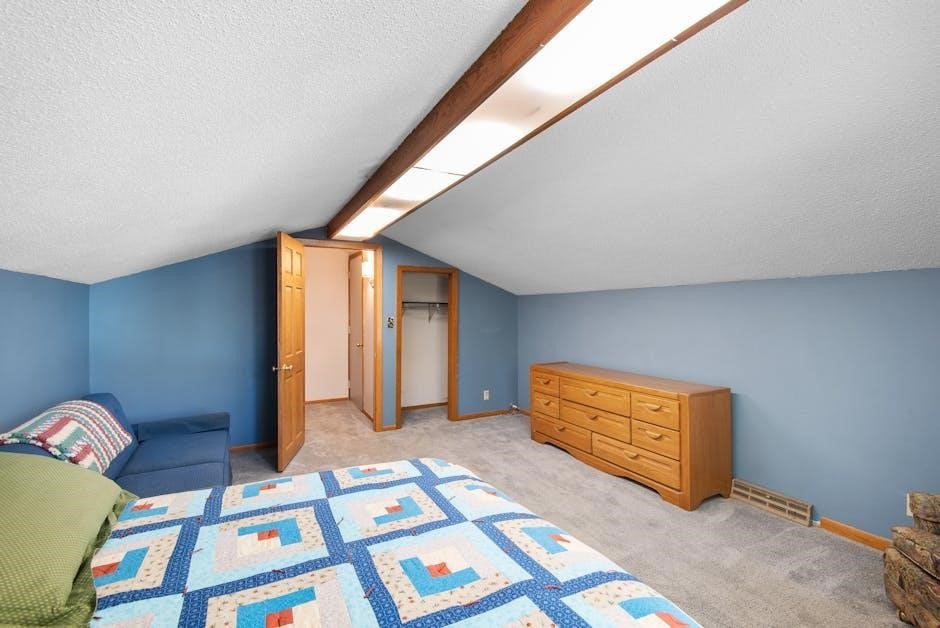
Non-adjustable floor guides offer a simpler, more permanent solution for sliding closet doors on carpet, but require careful initial placement. These guides have a fixed height and are best suited for situations where the carpet thickness is consistent and well-known before installation.
While less adaptable than adjustable versions, they can be effective if installed correctly. It’s vital to accurately measure the door’s bottom edge clearance and select a guide that provides the appropriate height to prevent dragging or lifting. Because carpet compresses, a slightly higher guide might be preferable to avoid future issues. They are generally more affordable but offer less flexibility if carpet changes or settles over time.
Wheel-Based Floor Guides
Wheel-based floor guides represent an innovative approach to sliding closet door functionality on carpet, addressing the challenges of compressibility. These guides utilize small wheels that roll along the carpet fibers, minimizing friction and providing smoother movement compared to static guides.
Some designs even incorporate adjustable wheels, allowing for fine-tuning to accommodate varying carpet thicknesses and pile heights. The envisioned spiked wheel designs, adjustable with a screwdriver, offer a potential solution for secure attachment without screws, biting into the carpet or base. This is particularly useful when a traditional screw-in base isn’t feasible, offering a secure and adaptable solution for carpeted closets.

Tools and Materials Needed
Successful installation requires a floor guide kit, appropriate adhesives for carpet, a screwdriver, and a measuring tape for precise placement and secure attachment.
Floor Guide Kit Contents
Typically, a sliding closet door floor guide kit includes the floor guides themselves – often made of plastic or metal – designed to fit the specific door system. You’ll generally find mounting hardware, which may consist of screws for hard surfaces, but often lacks components suitable for carpet.
Some kits include adhesive pads as a supplemental attachment method, recognizing the challenges of securing guides to carpet. However, these adhesives may not always be heavy-duty enough for long-term reliability. It’s crucial to verify the kit’s contents and determine if additional, stronger adhesives or alternative attachment solutions, like Velcro or spiked wheels, are necessary for a secure installation on a carpeted floor. Always check for compatibility with your door type.
Adhesives for Carpet Installation
When installing sliding closet door floor guides on carpet, standard adhesives often prove insufficient. Heavy-duty double-sided tape, specifically designed for carpets, is a common starting point, but its longevity can be questionable. Construction adhesives, like liquid nails, offer a stronger bond, though carpet compatibility must be verified to avoid damage.

Epoxy-based adhesives provide exceptional strength but require careful application and curing. Consider the carpet pile height; thicker carpets necessitate adhesives that can bridge the gap. Thoroughly clean the carpet fibers before applying any adhesive to ensure optimal adhesion. Remember that adhesive-only solutions may require periodic reapplication due to carpet compression and wear.
Required Tools (Screwdrivers, Measuring Tape, etc.)
Successfully installing sliding closet door floor guides on carpet demands a specific toolkit. A measuring tape is essential for precise guide placement, ensuring doors track correctly. Both Phillips and flathead screwdrivers are needed, depending on the guide’s mounting hardware. A utility knife will be useful for trimming carpet fibers if necessary.
A vacuum cleaner is crucial for preparing a clean surface for adhesive application. A caulk gun is required if using construction adhesive. For spiked wheel designs, a screwdriver capable of turning the spikes is vital. Safety glasses protect your eyes from debris, and gloves maintain a clean grip. A level ensures the guide is perfectly aligned for smooth door operation.
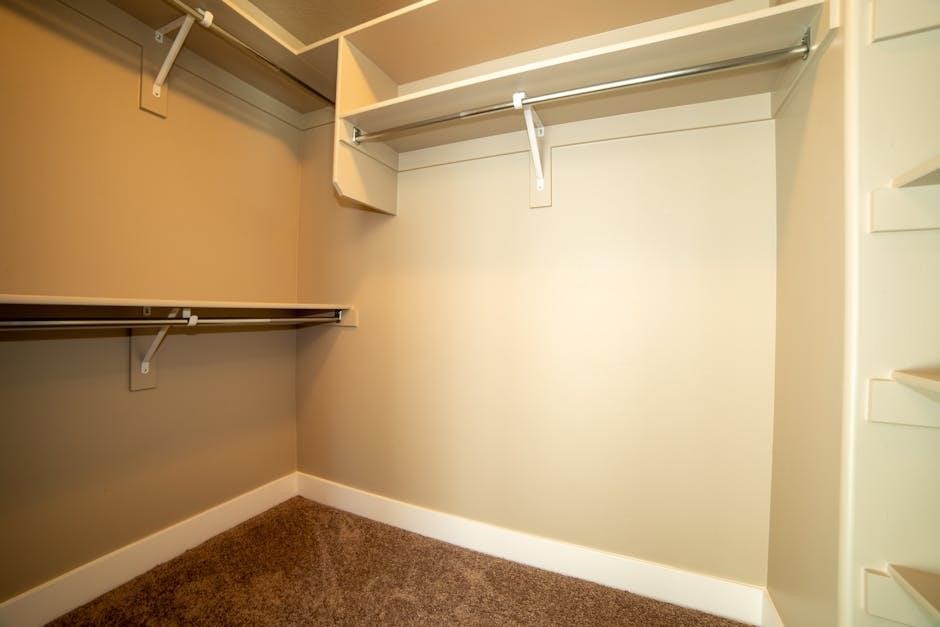
Installation Process: Step-by-Step
Begin by preparing the carpet, positioning the floor guide accurately, and then securing it using either strong adhesive or appropriate screws for stability.
Preparing the Carpeted Surface
Before installing the floor guide, meticulous carpet preparation is essential for a secure and functional installation. Begin by thoroughly cleaning the carpet area where the guide will be placed, removing any dust, debris, or loose fibers that could compromise adhesion.
Next, carefully assess the carpet’s pile height and density; higher piles may require a more robust adhesive or alternative attachment method. It’s generally recommended to install the carpet before the floor guide, as maneuvering doors within a confined space is difficult.
Ensure the carpet is firmly tacked down around the perimeter of the closet to prevent shifting. Finally, consider using a carpet protector to shield the surrounding fibers during the installation process, maintaining a clean and professional finish.
Positioning the Floor Guide
Accurate positioning of the floor guide is paramount for smooth sliding door operation. Begin by closing the closet doors and observing the existing track alignment; the guide should be placed directly in the path of the bottom door edge.
Use a measuring tape to ensure equal distance from both door edges, maintaining symmetry. Mark the desired location on the carpet, considering the guide’s dimensions.
For center-guide bracket systems, precise alignment with the track is crucial. Double-check the position before proceeding, as adjustments after securing the guide can be challenging, especially on carpet. A properly positioned guide prevents derailment and ensures effortless sliding.
Securing the Floor Guide (Adhesive vs. Screws)
Securing the floor guide on carpet requires careful consideration of attachment methods. Screws are generally preferred for hard floors, but aren’t viable without a subfloor. High-strength adhesive becomes essential for carpet installation.
Ensure the carpet surface is clean and dry before applying adhesive. Heavy-duty double-sided tape or specialized carpet adhesives offer strong bonds. Alternatively, explore floor guides with spiked wheel designs that grip the carpet fibers.
If a subfloor is present, short screws can be used, but pre-drilling is recommended. Regardless of the method, allow sufficient curing time for the adhesive before testing the door’s movement.
Alternative Attachment Methods for Carpet
Beyond screws, consider heavy-duty tape, Velcro strips, or floor guides featuring spiked wheels designed to grip and secure to the carpet fibers.
Using Heavy-Duty Double-Sided Tape
Employing heavy-duty double-sided tape presents a non-invasive solution for securing sliding closet door floor guides to carpeted surfaces. This method avoids the need for screws, which are difficult to implement without a solid subfloor. However, selecting the right tape is paramount; standard tapes lack the necessary adhesive strength to withstand repeated door movement and potential stress.
Look for tapes specifically designed for carpet adhesion, boasting a robust, industrial-strength formula. Thoroughly clean both the floor guide’s contact surface and the carpet fibers with a suitable cleaner to remove dust and debris, ensuring optimal bonding. Apply generous strips of tape, pressing firmly to create a secure connection. Regularly inspect the tape’s adhesion, as carpet fibers can loosen it over time, requiring replacement for continued functionality.
Employing Velcro Strips
Utilizing Velcro strips offers a removable and adjustable attachment method for sliding closet door floor guides on carpet. This approach allows for easy repositioning or removal if needed, without damaging the carpet. Industrial-strength, heavy-duty Velcro is essential, as standard varieties may not withstand the consistent pressure and movement of the door.
Adhere one side of the Velcro to the floor guide and the corresponding side to the carpet, ensuring a clean and dry surface for optimal bonding. Press firmly to create a strong connection. Regularly check the Velcro’s grip, as carpet pile can interfere with adhesion over time. This method is particularly useful for renters or those seeking a temporary solution, offering flexibility without permanent installation.
Spiked Wheel Designs
An innovative solution involves floor guides featuring internally spiked wheels, designed to grip directly into the carpet fibers. These wheels, adjustable via a screwdriver mechanism, allow users to control the depth and firmness of the grip, adapting to varying carpet thicknesses and densities. This method bypasses the need for adhesives or screws, offering a secure and potentially damage-free installation.
The spiked wheels effectively anchor the floor guide, preventing derailment and ensuring smooth door operation. However, consider the carpet’s construction; excessively dense or thick carpets might limit the wheel’s effectiveness. Regularly inspect the spikes for wear and tear, and adjust as needed to maintain optimal performance. This design provides a unique alternative for carpeted closets lacking a solid subfloor.
Troubleshooting Common Issues
Derailment, sliding difficulties, and loose guides are common. Re-adjust, check for carpet interference, and ensure secure attachment using appropriate methods for carpet.
Door Derailment
Door derailment is a frequent issue when sliding closet doors are installed over carpet. This often stems from the floor guide’s inability to maintain consistent contact with the door’s bottom edge due to the carpet’s give.
Inspect the floor guide’s positioning; ensure it’s correctly aligned and securely fastened. If using adhesive, verify a strong bond. For spiked wheel designs, confirm adequate penetration into the carpet fibers.
A common fix involves re-adjusting the guide, sometimes requiring slightly raising it to compensate for carpet thickness. Regularly check for debris accumulation around the guide, as this can impede smooth movement and contribute to derailment. Consider stronger attachment methods if issues persist.
Difficulty Sliding
If your sliding closet doors struggle to move smoothly across carpet, the floor guide is a prime suspect. Carpet fibers create resistance, and an improperly installed or inadequate guide exacerbates this. Check for obstructions like accumulated dust or carpet fibers wrapped around the guide’s wheels or base.
Ensure the guide isn’t too tightly pressed against the door, as this increases friction. Conversely, insufficient pressure can cause the door to lift and bind. Experiment with minor adjustments if your guide is adjustable.
Lubricating the guide’s contact points with a silicone-based spray can also alleviate friction. If the carpet is particularly plush, consider a wheel-based guide for easier movement.
Floor Guide Coming Loose
A floor guide detaching from the carpet is a common issue, particularly with adhesive-based installations. Carpet’s natural give and wear can weaken the bond over time. Regularly inspect the guide for any signs of lifting or movement. If using adhesive, ensure the carpet surface was thoroughly cleaned before application, removing dust and debris.
For guides secured with screws, verify the screws haven’t loosened due to repeated door movement. Consider using longer screws to reach a more solid subfloor if possible.
If re-adhering, use a heavy-duty carpet adhesive specifically designed for this purpose, and apply firm, even pressure during the curing process.